The Sugar Stack
How ideas become companies in Louisiana, and why every success story starts with an enormous amount of grind.
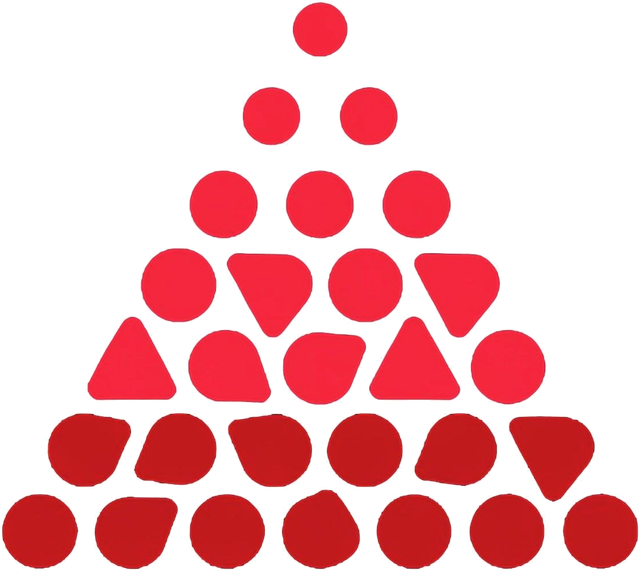
Why sugar?
Sugar has shaped Louisiana for more than two centuries, and it is a story of refinement. Every fall the mills run day and night through what Louisianans call grinding season, from late September into January.
It takes a mountain of cane to make a pile of sugar. Startups work the same way: thousands of ideas, conversations and prototypes go in at the bottom, and a small amount of finished crystal comes out the top. The Sugar Stack is the model Startup Grind New Orleans and StartPort use to make that path visible.
The industry’s history includes the forced labor of enslaved people. We use the refining process as a metaphor for how ideas mature, not to romanticize that past.
Source: American Sugar Cane League and LSU AgCenter, 2024 crop report.
The full path, from cane to crystal
Four layers, each matched to a step at the mill, a stage for founders, the Grind to Market question that moves you up, and the Louisiana organizations that help at that layer.
-
Layer 1
Raw cane
- At the mill
- Harvest and grind. Cane is cut in the field and crushed at the mill to release its juice.
- For founders
- Ideas, curiosity and first experiments. Most people enter here.
- The question
- Who has this problem?
- With us
- Beta in Progress, Tribe Code
- Who helps in Louisiana
-
Layer 2
Boiling
- At the mill
- Clarify and boil. The juice is cleaned and boiled down into thick syrup. Most of the water leaves here.
- For founders
- Testing and customer discovery. Prototypes meet real users, and weak ideas boil off.
- The question
- Will they use it?
- With us
- Tribe Code, workshops, after-hours sessions
- Who helps in Louisiana
-
Layer 3
Crystallization
- At the mill
- Crystallize. In vacuum pans the syrup forms crystals, and a centrifuge spins them free of molasses.
- For founders
- Real startups with traction. Usage clusters, revenue starts and first capital arrives.
- The question
- Where does usage cluster?
- With us
- Pitch events, Global Pitch Week local round
- Who helps in Louisiana
-
Layer 4
Packaging
- At the mill
- Refine, pack and ship. Raw sugar is refined, packaged and sent to market around the world.
- For founders
- Scale and distribution. Companies grow, raise larger rounds, export and sometimes exit.
- The question
- Can you reach more of them, repeatably?
- With us
- Global sessions with Startup Grind chapters, the Startup Grind Conference
- Who helps in Louisiana
Organization names link to their entries in the ecosystem directory.
Two directions at once
Up the stack: ideas rise layer by layer, from raw cane to packaged product. Most never reach the top, and that is how it should work.
Around the loop: inside every layer, founders build, measure, learn and refine, over and over. The faster the loop turns, the faster an idea earns its way up.
- PackagingA few companies scale and export
- CrystallizationSome ideas become real startups
- BoilingMany ideas get tested
- Raw caneEveryone starts here: the grind
What is a unicorn?
A unicorn is a privately held startup valued at $1 billion or more. When venture capitalist Aileen Lee named them in 2013, she found just 39 in the United States: about 0.07% of venture-backed software startups, or 1 in 1,538.
- Unicorn
- A privately held startup valued at $1 billion or more. Venture capitalist Aileen Lee coined the term in TechCrunch on November 2, 2013, because companies reaching that mark were so rare.
- Decacorn
- A private startup valued at $10 billion or more.
- Hectocorn
- A private startup valued at $100 billion or more.
- Exit
- The moment founders and investors turn ownership into cash, usually through an acquisition or a public listing.
- Grinding season
- Louisiana’s name for the months when sugar mills run nonstop crushing cane, from late September or October into January.
- The grind
- The bottom of the Sugar Stack: the experiments, customer conversations, failed prototypes and pivots that every success sits on top of.
Source: Aileen Lee, “Welcome To The Unicorn Club,” TechCrunch, November 2, 2013. Today’s trackers count well over a thousand unicorns worldwide, but they remain a tiny share of all startups.
It takes an enormous amount of grind
Every unicorn was raw cane first.
The headlines show the crystal at the top. They skip the base: the founder who talked to a hundred customers before one paid, the prototype rebuilt three times, the pivot that saved the company. That base is the grind, and it is where most of the work happens.
In 2021, New Orleans got proof that the path runs all the way up: research software company Lucid became the city’s first tech unicorn when it sold for about $1.1 billion. It started the way every company here starts, at the bottom of the stack.
That is why our 2027 thesis is Grind to Market. Building got cheap. The grind now lives in finding customers, so spend 65% of your time there.
Start at the bottom of the stack.
Beta in Progress meets on the second Thursday of every month. It’s free, and you don’t need a pitch or traction.
Where are you on the stack?
Tell us your layer and what would help you move up. We use the answers to plan Beta in Progress topics and match founders with help.
Questions about the Sugar Stack
- What is the Sugar Stack?
- The Sugar Stack is the model Startup Grind New Orleans and StartPort use to explain how ideas mature into companies in Louisiana. It borrows the four stages of Louisiana sugar making: raw cane, boiling, crystallization and packaging. Ideas move up through the layers, and a build, measure, learn loop runs inside every layer.
- Why use sugar to explain startups?
- Sugar has shaped Louisiana’s economy for more than 200 years, and it is a process of refinement. In 2024 Louisiana mills processed about 17.4 million tons of cane to make about 2.1 million tons of sugar, roughly 8 tons of cane for every ton of crystal. Startups work the same way: a lot of raw material for a small amount of finished product.
- What is a unicorn startup?
- A privately held startup valued at $1 billion or more. Aileen Lee coined the term in 2013, when about 0.07% of venture-backed software startups, roughly 1 in 1,538, had reached that mark.
- Has New Orleans produced a unicorn?
- Yes. Lucid, a New Orleans market-research software company, became the city’s first tech unicorn in 2021 when it sold for about $1.1 billion.
- Where do I start?
- At the bottom of the stack. Come to Beta in Progress, Startup Grind New Orleans’ free monthly builder session on the second Thursday of every month.